

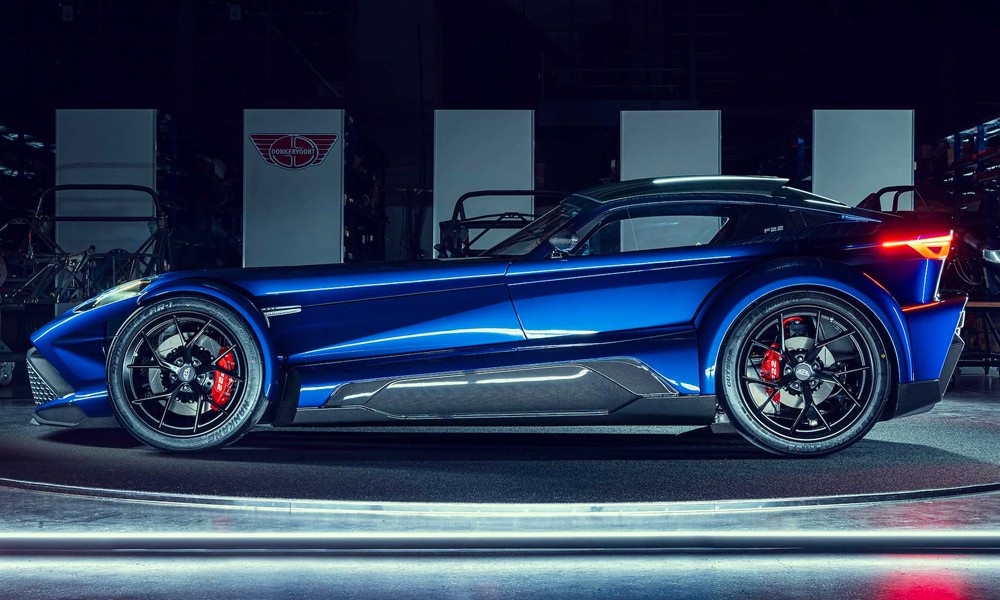
Exotic cars are designed to deliver outstanding power whilst maintaining control and precision. High speeds generate high aerodynamic forces, quick weight transfers and higher tyre, suspension and braking system stress. In order to remain stable under such circumstances, exotic car makers employ advanced engineering and sophisticated technologies. Special attention is paid to the car’s balance, responsiveness Fisher Luxury Rental vehicle lineup and safety during all phases of its lifecycle, including high cornering and acceleration.
The role of aerodynamics is explained.
One of the most important considerations for high-speed stability is aerodynamics. This is because as the car accelerates, the air flow around the car can have forces that can help or hinder stability.
Exotic cars have aerodynamic features like splitters, air vents, rear diffusers and smooth body shapes to create a good balance of airflow. These enable the car to generate downforce (downwards pressure on the road surface), whilst reducing drag. More downforce means more traction from the tyres and less chance of the car becoming unstable at high speeds. Many modern exotic vehicles have active aerodynamic systems that automatically adjust their components as a function of speed and conditions of travel.
Advanced Suspension Systems
The suspension system is an important component in maintaining the stability of an exotic vehicle. High-performance suspension is to ensure good tire-to-road grip while accelerating, braking and cornering.
Exotic vehicle systems may have adaptive suspension technology that variably adjusts the stiffness and ride height of the suspension in response to the road conditions and ride mode. The suspension is stiffer at high speed to minimise body movement and enhance control. Other cars can automatically lower their ride height to decrease the air resistance and increase the car’s aerodynamics.
Tire Grip and Performance
The tyres are the only part of the vehicle contacting the road and are very important in maintaining stability. Special performance tyres with high-quality rubber composition and extra strengthening are used in exotic cars.
These types of tyres offer the best traction at high speeds and at fast corners. The wider the tyre, the more surface area it will have in contact with the road, which will give it better traction and stability. Proper tyre pressure and temperature are also significant, as performance tyres are designed to perform at a certain pressure and temperature for the best performance.
Weight distribution and vehicle balance.
Exotic cars are stable if they have a well-distributed weight. Mid-engine layout is a common feature in many supercars, with the engine positioned more centrally.
This helps you to maintain balance and prevents too much weight transfer while driving aggressively. With appropriate weight distribution, all four wheels will have better traction and control at high speeds. These lightweight carbon fibre and aluminium materials also contribute to stability, offering a reduction in unnecessary weight.
Electronic Stability and Traction Systems
Advanced electronic systems are used in modern exotic cars as a means of helping with stability. Electronic stability control and traction control systems monitor wheel speed, steering angle and vehicle movement at all times.
If wheel slippage or instability is detected, the system can automatically counteract these conditions by modifying the braking force or engine output. These systems react in milliseconds and are particularly effective when the vehicle makes sudden movements or when it’s in rough weather.
